IPv6 in Egypt: We Checked 323 Egyptian Websites and Found No Locally Hosted Site Supporting It, Plus a Readiness Checklist for End-2026
Short answer: Egypt's national strategy targets full IPv6 support by all internet service providers by the end of 2026, and on 14 October 2026 the National Telecom Regulatory Authority (NTRA) said IPv6 now reaches nearly 23 million subscribers. Websites have not kept pace: on 30 October 2026 we checked 323 Egyptian websites under .eg and found that only 80 (24.8%) publish an AAAA record, and none of the 162 sites hosted on addresses registered in Egypt supports IPv6. The practical fix is a 9-step plan that starts with asking your hosting provider for an IPv6 address and ends with testing email and your business systems.
IPv6 in Egypt is no longer a theoretical topic for telecom operators only. Internet Protocol version 6 (IPv6) is the generation of the protocol that solves IPv4 address exhaustion, giving every device a direct public 128-bit address instead of a 32-bit one. As Egyptian mobile networks start connecting millions of subscribers over IPv6, the important question for any company, clinic or government body is simple: are your website, email and DNS servers ready to receive those connections directly, or do they depend on translation inside the operator's network?
What is happening with IPv6 in Egypt in October 2026?
Egypt launched its National IPv6 Strategy in May 2025. According to the Ministry of Communications and Information Technology, the strategy aims to prepare public and private infrastructure for IPv6 within three years, to have internet service providers fully IPv6-ready by 2026, and to exceed 80% national adoption by 2030.
On 14 October 2026, Al-Masry Al-Youm published NTRA's announcement that it had received an IPv6 Forum award at Network X 2026 in Vienna (13 to 15 October). The announcement says NTRA required telecom operators to apply the protocol across their entire infrastructure and that IPv6 subscribers in Egypt have reached nearly 23 million, the highest number in Africa.
Why don't the numbers match?
APNIC Labs statistics measure something different: the share of users whose browsers can actually fetch content over IPv6, using tests delivered inside online ads. On 29 October 2026 Egypt stood at 5.40% IPv6-capable and 5.26% IPv6-preferring, compared with 5.31% on the day the strategy was launched, 10 May 2025. The same data shows a large gap between networks: ETISALAT MISR recorded about 55.66%, while the other large networks in the measurement stayed below 1%.
In short, "subscribers reached by the protocol" and "users actually capable of IPv6" are different metrics, and both suggest that IPv6 demand will rise on the network side before it rises on the website side.
Our own measurement: IPv6 readiness of 323 Egyptian websites
On 30 October 2026 the Smart One Group team checked every Egyptian domain under .eg in the Tranco top-one-million list (list 262N9), 332 domains in total, of which 323 websites resolved. We queried A and AAAA records for the domain and for www, the IPv6 addresses of mail servers (MX) and name servers (NS), and identified the network that owns each site's address and the country where it is registered.
| Indicator | Result |
|---|---|
| Sites publishing an AAAA record (domain or www) | 80 of 323 (24.8%) |
| AAAA on both the domain and www | 53 sites |
| AAAA on www only, not on the bare domain | 22 sites |
| Sites on IPv4 addresses registered in Egypt | 162 sites, none of which supports IPv6 |
| Sites hosted outside Egypt | 159 sites, 80 of which support IPv6 (50.3%) |
| IPv6 sites served through Cloudflare | 60 of 80 (75%) |
| Domains with at least one IPv6 mail server | 132 of 284 (46.5%) |
| Domains with at least one IPv6 name server | 121 of 272 (44.5%) |
| Domains whose name servers are all under .eg | 60 domains, none with an IPv6 name server |
| Full readiness (website, DNS and email) | 50 of 272 delegated domains (18.4%) |
What do these numbers mean?
- Existing support is almost entirely imported: every IPv6 address we found is registered outside Egypt, mostly with global CDNs and clouds (73 of 80). Egyptian sites that support IPv6 mostly got it "for free" from a global provider, not from a local plan.
- Local hosting is the biggest gap: 162 sites sit on addresses registered in Egypt, many of them government and university sites, and not one of them has an AAAA record.
- Differences by type: 8 of 85 sites under gov.eg, 13 of 89 under edu.eg, 32 of 88 under com.eg and 25 of 48 directly under .eg.
- Email is in better shape than websites: because many companies use Microsoft 365 or Google mail; 92 of 98 domains using outlook.com servers, and 40 of 40 using Google servers, have an IPv6 mail server.
- Even the .eg servers themselves: the .eg top-level domain has three name servers; the local one (frcu.eun.eg) has no IPv6 address, while the two located outside Egypt do.
For comparison, the IPv6 Global Statistics site, citing Vyncke's measurement, reports that 28% of Egypt's top websites are fully reachable over IPv6, close to our result.
Will your website break if it does not support IPv6?
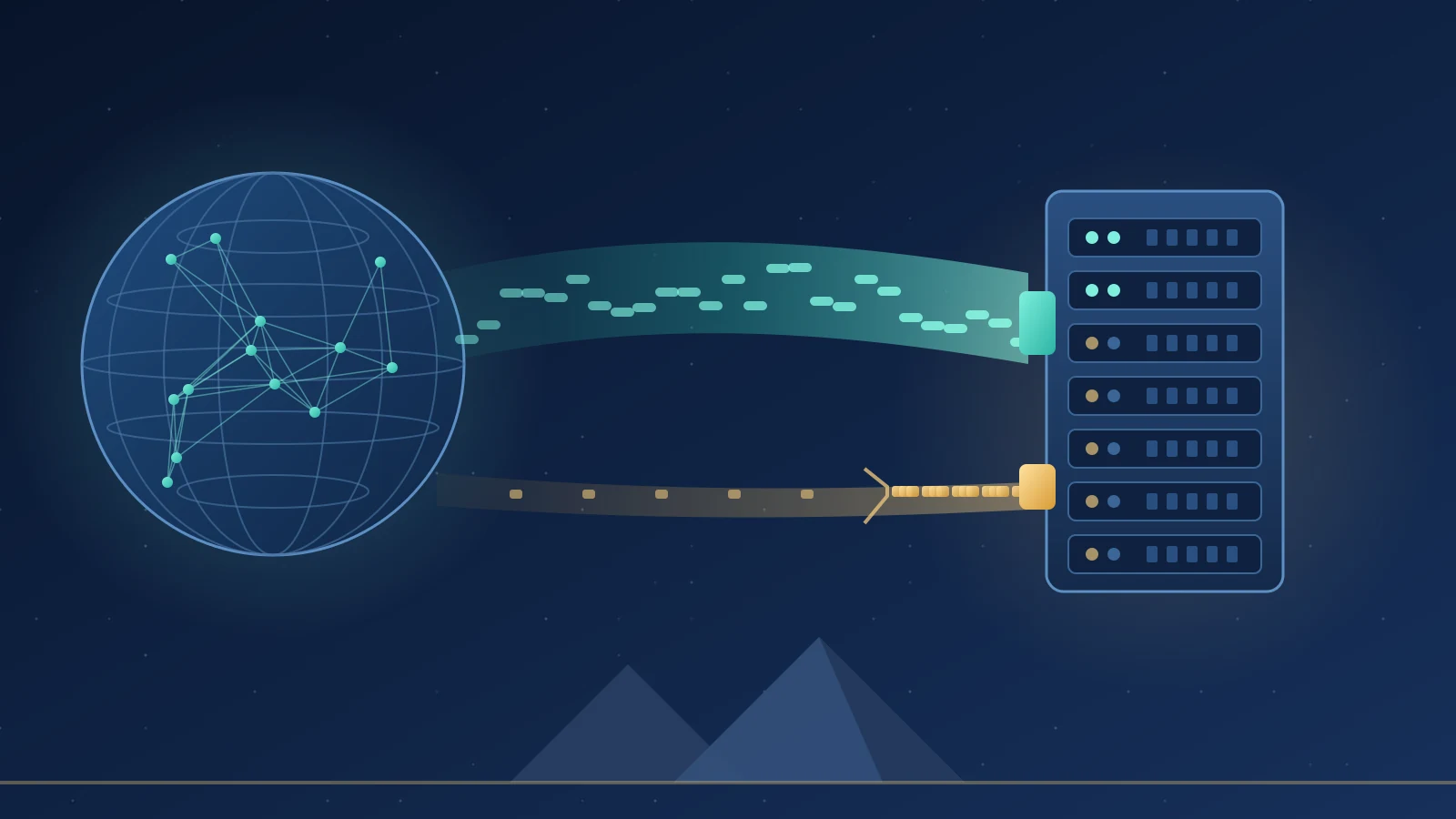
No, not today. Most networks run "dual stack", carrying IPv4 and IPv6 together, and IPv6-only networks usually provide NAT64 translation to reach IPv4 sites. That does not mean it is free of cost:
- Every connection that passes through translation or operator-level IPv4 sharing (CGNAT) adds a layer that can fail or slow down, and your company has no control over it.
- Sharing one IPv4 address among many customers confuses security tools that block or rate-limit by address, so an innocent customer can be blocked because of another user on the same address.
- The national strategy explicitly talks about public and private infrastructure readiness, so organizations that work with government or bid for technology projects will be asked about it sooner or later.
On the other hand, enabling IPv6 badly is worse than not enabling it. Browsers use the Happy Eyeballs algorithm (RFC 8305) to try IPv6 and IPv4 in parallel, but an AAAA record that points to a server that does not respond, or to a firewall that blocks IPv6, can cause slowness or errors for some visitors. That is why the plan starts with testing, not with adding the record.
IPv6 readiness checklist for Egyptian companies: 9 steps
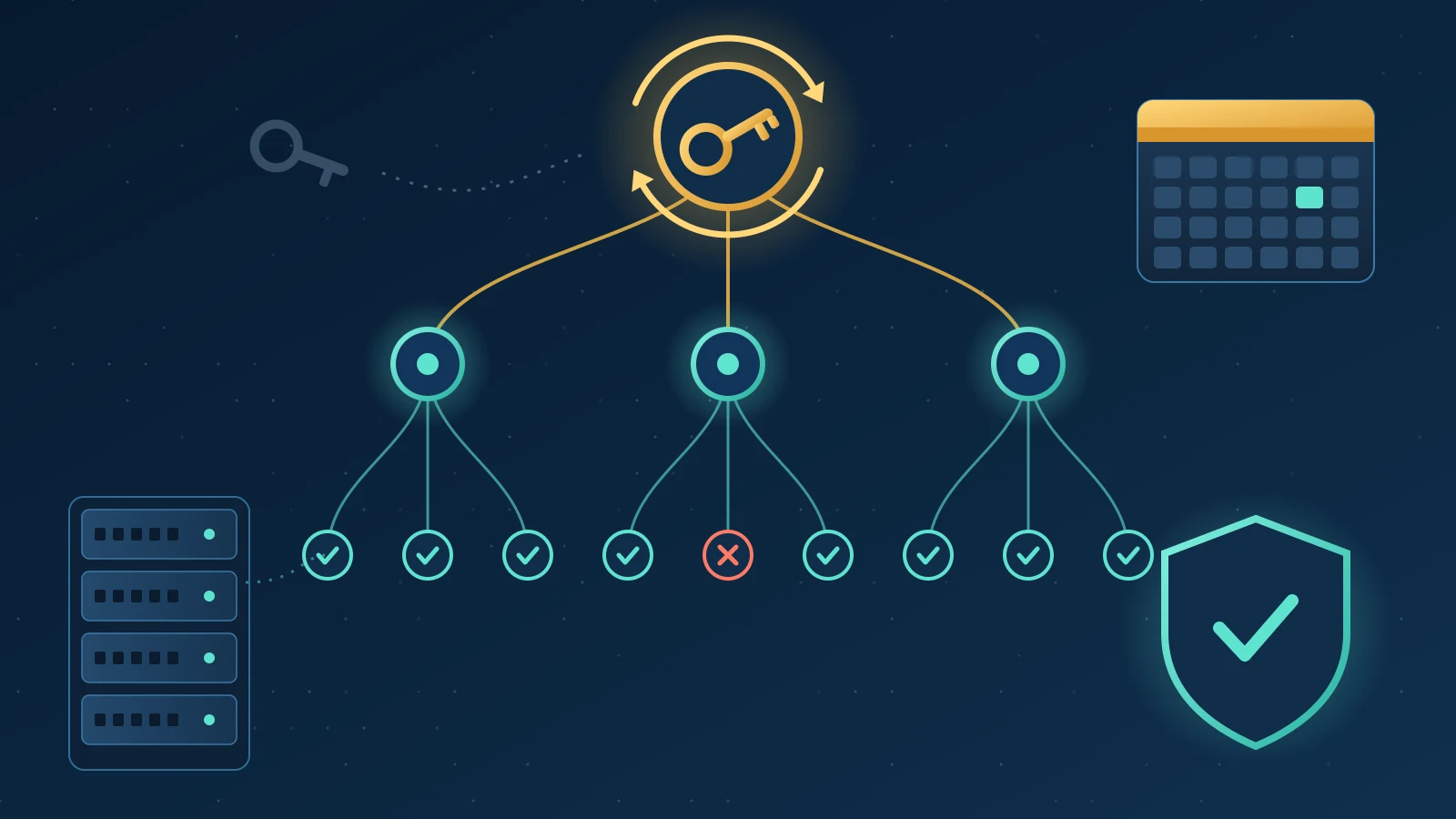
- Inventory everything that has an address: the main site and www, subdomains, mail servers, DNS servers, clinic booking portals and APIs for ERP and accounting systems.
- Ask your hosting provider for IPv6: ask explicitly whether the server gets an IPv6 address or a /64 block. If a local provider does not offer it, ask for a written date.
- Or take the fast path through a CDN: Cloudflare's documentation explains that it enables IPv6 by default and automatically generates AAAA records for proxied domains, while connecting to your origin over IPv4. This is a practical interim fix, but it does not make your own server ready.
- Configure the server and the firewall together: make the web server listen on IPv6 and apply the same firewall rules to IPv6. The most dangerous mistake we see is enabling IPv6 while leaving it wide open because the team only hardened IPv4.
- Add AAAA for both the domain and www: we found 22 sites that support IPv6 on www only. A visitor typing the bare domain should get the same experience.
- Test before and after publishing: try the site from an IPv6-capable network, watch server logs for IPv6 addresses, and confirm that the SSL certificate and redirects work on both addresses.
- Prepare DNS: if your name servers are under .eg with a local provider, ask for IPv6 addresses for them or move DNS to a provider that supports it. See also our guide to DNSSEC and .eg domains.
- Do not forget email: if your server sends mail over IPv6, its address needs a correct PTR record and must be covered by your SPF record, or messages may be rejected. Details are in our Spamhaus and DMARC requirements guide.
- Review your internal systems: clinic, ERP and HR systems that log user addresses or restrict access by an address allowlist must accept the longer IPv6 format (up to 45 characters in text form) in the database, logs and allow rules.
How Smart One Group can help
Through our hosting and server services we audit IPv6 readiness for your website, email and DNS, review your domains and name servers, and update custom systems to handle IPv6 addresses correctly, with ongoing monitoring under our support contracts. If you would like a report on your domain, get in touch.
Frequently asked questions
What is IPv6 in short?
IPv6 is version 6 of the Internet Protocol. It uses 128-bit addresses instead of IPv4's 32 bits, providing an enormous number of addresses and ending the need to share addresses between users.
Does my company have to enable IPv6 before the end of 2026?
The end-2026 target in the national strategy is aimed at internet service providers, not an announced obligation on websites. However, the strategy targets public and private infrastructure readiness within three years of May 2025, so it is wise to start now with a tested plan.
How do I know whether my website supports IPv6?
A website supports IPv6 when its name has an AAAA record pointing to a server that actually responds on that address. Check both the bare domain and www, then try opening the site from an IPv6-capable network.
Is using Cloudflare or another CDN enough?
It is a quick fix that lets visitors reach your site over IPv6, but it does not cover email, standalone DNS servers or internal systems, and your origin server stays on IPv4.
Does IPv6 affect server security?
Yes, if it is enabled without configuration. Firewall rules and intrusion prevention tools must apply to IPv6 just as they do to IPv4, because any port open on IPv6 is directly exposed to the internet.
Why don't websites hosted in Egypt support IPv6?
In our sample we found no site hosted on addresses registered in Egypt with an AAAA record. Likely reasons are that many local data centres and hosting providers do not yet offer IPv6 to customers, or offer it without anyone asking for it. So ask your provider directly.
Methodology: a DNS-over-HTTPS check on 30 October 2026 of all .eg domains in Tranco list 262N9, with each address's network and registration country identified through the Team Cymru service. The measurement is based on DNS records and did not test actual connectivity over IPv6, and it names no individual websites.