Email Marketing in Egypt After the PDPL Deadline: A Consent-to-Inbox Map and 10-Step Checklist
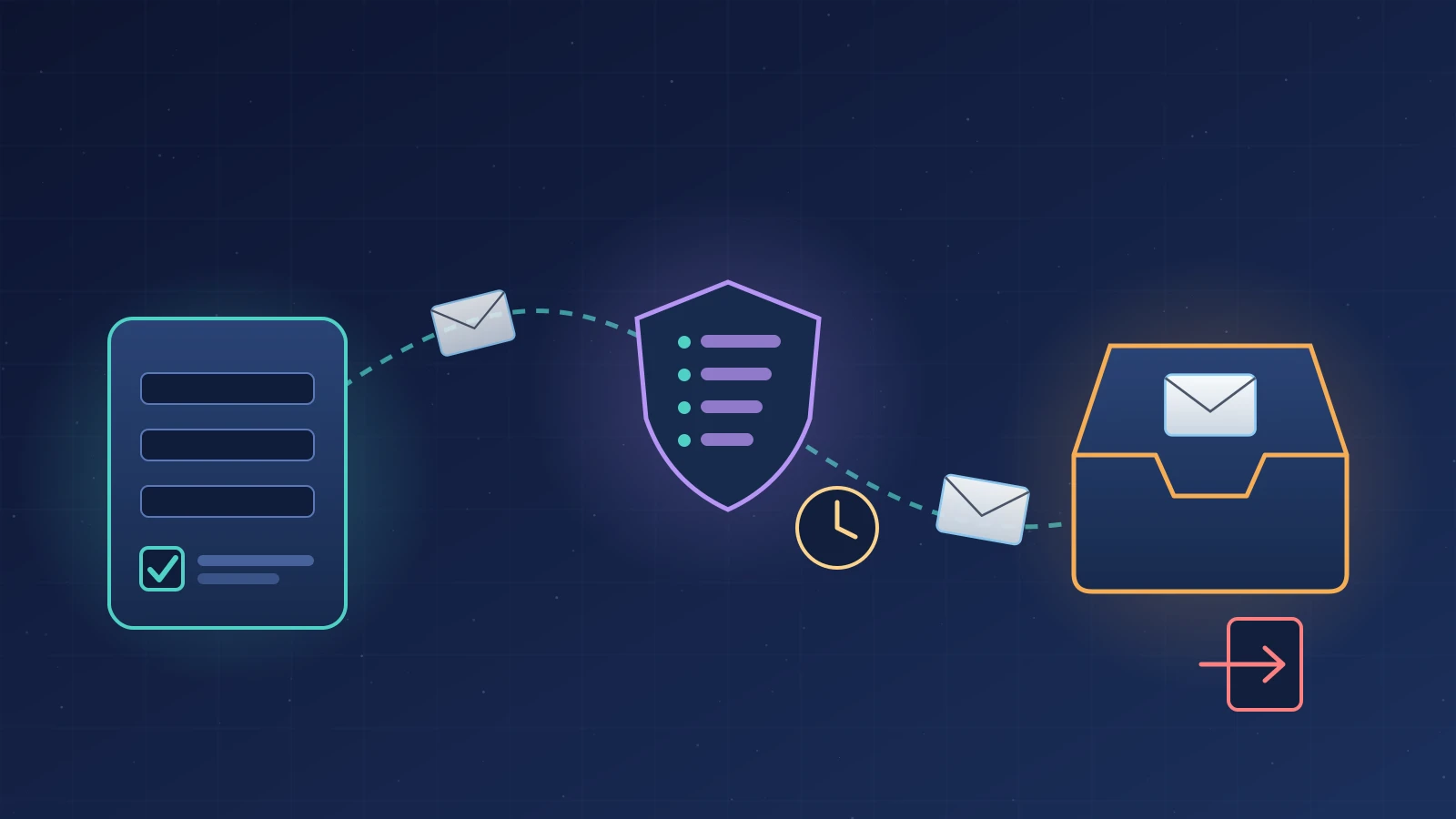
Short answer: Since the compliance grace period under Egypt's Personal Data Protection Law No. 151 of 2020 ended (31 October 2026), any electronic communication for direct marketing needs five things at once: prior explicit consent, a direct marketing licence or permit from the Personal Data Protection Center (PDPC), a clearly identified sender, an easy way to refuse, and electronic records kept for three years from the last message. The practical surprise is that most of these conditions are the same ones Gmail, Yahoo and Outlook require to deliver your messages to the inbox, so one correct technical setup serves both compliance and deliverability.
Email marketing in Egypt is now a form of direct electronic marketing: any promotional electronic communication sent to a specific person. Egypt's Executive Regulations list its channels as email, text messages, personal messages via social media and phone calls. Many Egyptian companies and clinics still treat their newsletter as a simple marketing tool, but it is now a licensed activity with written rules and fines of up to EGP 2 million. This guide from Smart One Group offers a practical framework we call the "consent-to-inbox map", linking each legal condition to the technical setting that fulfils it, and ends with a 10-step checklist. It is not legal advice; the final decision belongs to your legal adviser.
What does the law require for email marketing in Egypt?
Article 17 of Law 151 of 2020 prohibits any electronic communication for direct marketing unless five conditions are met: the data subject's consent, the identity of the communication's creator and sender, a valid address at which the sender can be reached, an indication that the communication is for direct marketing, and clear, uncomplicated mechanisms to refuse the communication or withdraw consent.
Article 18 adds three obligations: a defined marketing purpose, not disclosing the data subject's contact details, and keeping electronic records of their consent and its amendments for three years from the date of the last message. Article 43 fines anyone who violates these two articles between EGP 200,000 and EGP 2,000,000.
The Executive Regulations issued by Decree 816 of 2025 then detail these rules in Article 18:
- Licence: the sender must hold a PDPC licence to conduct direct electronic marketing.
- Explicit consent: to receive marketing communications specifically, not just general consent to data collection.
- Erasure: when the person withdraws consent, or when the retention period ends or the marketing purpose lapses, whichever comes first.
- No reuse: data collected for marketing may not be used for another purpose or exchanged without explicit consent.
- Marketing intermediary: an agency sending on your behalf must verify consent and keep the data source, or immediately stop using the data.
Can you send offers to existing customers?
Not automatically. Article 2 of the Regulations says that providing personal data to receive a service or complete a lawful transaction counts as consent to process it for that purpose, and it may not be used for other purposes without prior consent. A patient's phone number registered to book an appointment, or a customer's email on an invoice, can be used to confirm the appointment or send the invoice, but it is not on its own a basis for a promotional campaign. The practical fix is one clear message asking for marketing permission and recording the reply and its date.
How much does a direct marketing licence cost?
Article 29 of the Regulations creates two categories: marketing for yourself (promoting your own goods and services), with a fee of 10% of the controller or processor licence fee, and marketing for others (agencies and service providers) at 25%. The controller/processor fee itself, under Article 19, scales with the number of records and starts with a fee exemption for companies' combined licences up to 100,000 records. A fee exemption is not a licence exemption. Article 30 requires applicants to describe how consent is obtained, how people can refuse or withdraw, and how consent records and erasure or amendment requests are kept. In other words, what you build technically is exactly what you will describe in your application on the PDPC portal.
According to an analysis by Habib Al Mulla and Partners (November 2026), the grace period ended on 31 October 2026 and a decision on an application can take up to 90 days, so filing a complete file early is advised.
What do Gmail, Yahoo and Outlook require from senders?
Alongside the law, the major mailbox providers set rules for bulk senders, meaning those sending more than 5,000 messages a day:
- Google: since 1 February 2024, its sender guidelines require SPF, DKIM and DMARC, a reported spam rate below 0.3%, and one-click unsubscribe for marketing messages plus a clearly visible link in the body. Its FAQ recommends honouring unsubscribe requests within 48 hours.
- Yahoo: its sender best practices require a List-Unsubscribe header supporting one-click, honouring unsubscribes within 2 days, and a spam rate below 0.3%.
- Microsoft: it announced in April 2025 that Outlook.com requires domains sending over 5,000 messages a day to pass SPF and DKIM and publish DMARC of at least p=none, rejecting non-compliant messages with code 550 5.7.515 from 5 May 2025, and it recommends functional unsubscribe links and confirming recipient consent.
RFC 8058 defines the one-click method: a List-Unsubscribe header with an HTTPS URI, a List-Unsubscribe-Post header with the value List-Unsubscribe=One-Click, a DKIM signature covering both headers, and a server that accepts the POST request without redirects or login.
The consent-to-inbox map: each condition and its technical counterpart
This table is the guide's original framework; it puts the Egyptian text and mailbox-provider requirements in one row and names the setup that satisfies both:
| Condition | Egyptian source | Mailbox-provider counterpart | Suggested implementation |
|---|---|---|---|
| Prior explicit consent | Law Art. 17, Regulations Art. 18 | Google: send only to subscribers; Microsoft: ensure recipients consented | Unticked consent box separate from terms, plus a subscription confirmation email |
| Sender identity and valid address | Law Art. 17 (2, 3) | Microsoft: valid From or Reply-To that receives replies; Google: From domain aligned with SPF or DKIM | Send from your company domain with SPF, DKIM and DMARC, with company name and address in every footer |
| Marketing purpose stated | Law Art. 17 (4) and Art. 18 (1) | Google: one-click required for marketing, not transactional mail | Separate marketing from invoice and appointment messages in its own list and subdomain |
| Easy refusal and withdrawal | Law Art. 17 (5), Regulations Art. 18 | Gmail and Yahoo: RFC 8058 one-click, honoured within 48 hours or 2 days | List-Unsubscribe and List-Unsubscribe-Post headers, visible link, instantly updated suppression list |
| Records proving consent | Law Art. 18 (3 years), Regulations Arts. 2 and 18 | No direct counterpart | Tamper-resistant consent log (see fields below) |
| No disclosure, no reuse | Law Art. 18 (2), Regulations Art. 18 | Yahoo: honour the frequency subscribers signed up for | Restricted export rights; never import bought lists or service-only lists into the campaign tool |
| Sending reputation | No matching text | Spam rate below 0.3% | Monitor Postmaster Tools and remove bounced addresses regularly |
In our earlier measurement of 332 Egyptian domains in October 2026, 146 (44%) had no valid DMARC record, as detailed in our email settings and Spamhaus requirements guide. A large share of Egyptian domains therefore needs authentication work before any large campaign.
Which fields should a consent log keep?
A consent log is a database proving when, how and for what purpose each person agreed to receive marketing, and what later happened to that consent. Based on Articles 2 and 18 of the Regulations and Article 18 of the Law, we suggest these fields:
| Field | Why? |
|---|---|
| Date and time of consent | Regulations Arts. 2 and 18: date consent was obtained |
| Consent method and wording (form URL and checkbox text version) | Regulations Art. 2: the "form in which it was given"; Art. 18: "how" it was obtained |
| Purpose and channel (email, SMS) | Regulations Art. 18: the specific purpose of consent |
| Data source | Regulations Art. 18: intermediary's duty to keep the source |
| Erasure or amendment requests, action taken and date | Regulations Art. 18 (4/b) |
| Date of last marketing message | Law Art. 18: retention for three years from the last message |
One point needs a decision with your legal adviser: the Regulations require erasure on withdrawal, while the Law requires keeping consent records and their amendments for three years. A common technical approach is to keep a one-way hash of the address in the suppression list and withdrawal record while erasing the rest, so the address does not return through a later import.
A 10-step checklist before your next campaign
- Inventory data sources: CRM, Excel sheets, website forms and campaign tools, with record counts, since they determine fees.
- Classify every contact: documented marketing consent, service data only, or unknown source (do not use).
- Ask service-only contacts for permission in one clear message, and do not contact those who do not reply.
- Fix forms: unticked box, a line stating purpose and channel, a privacy policy link, and automatic logging to the consent log.
- Appoint a data protection officer and apply for the controller or processor licence and the marketing licence via the PDPC portal.
- Separate sending: a subdomain or sending account for marketing, away from invoice and appointment messages.
- Set up authentication: SPF, DKIM and DMARC aligned with the From domain.
- Enable one-click: RFC 8058 headers, a visible link, and immediate processing within 48 hours at most.
- Fixed legal footer: company name, address and a contact channel, plus a line stating the message is marketing.
- Agency contract: a clause requiring any marketing intermediary to verify consent, keep the source and hand over records on request.
How can Smart One Group help?
We build subscription forms and consent logs into websites and systems through our custom software service, configure email authentication and sending domains, and run campaigns under our digital marketing service. For the rest of your website obligations see our PDPL website compliance checklist, and for clinics our guide to clinic marketing rules.
Frequently asked questions
Do appointment confirmations and invoices fall under marketing rules?
In our reading, transactional messages are not marketing as long as they serve the purpose for which the data was collected, under Article 2 of the Regulations. Adding a promotional offer inside them may turn them into marketing communications.
Do I need a marketing licence if my list is small?
The Regulations do not tie the licence requirement to list size; size only affects fees, since the combined controller/processor licence is fee-exempt up to 100,000 records and the marketing fee is a percentage of it.
How long must consent records be kept?
Three years from the date of the last message under Article 18 of the Law, covering the consent and its amendments.
Is an unsubscribe link in the body enough?
Egyptian law requires a clear and easy mechanism. Gmail does not treat a body link alone as one-click; it requires the RFC 8058 headers for senders of more than 5,000 messages a day.
Can I buy a ready-made email list?
We advise against it: the Regulations require an intermediary to keep the data source and proof of consent or immediately stop using the data, and bought lists raise spam complaint rates.
What is the penalty for breaking the marketing rules?
A fine of EGP 200,000 to EGP 2,000,000 under Article 43 of the Law, in addition to the consequences of breaching licence conditions.
Want your subscription forms and email settings reviewed before your next campaign? Contact the Smart One Group team to review your consent log and sending path with you.