Google AI Mode's "Official Sites" Section: Will Google Recognize Your Website? A Scan of 263 Egyptian Sites and a Readiness Checklist
Short answer: On 15 October 2026 Google announced it is testing a section at the top of AI Mode answers that surfaces the "official" sites for completing a specific task, and on 23 and 26 October tests were spotted that show a site's link with its favicon, URL, an image and a date. Google says there are no special optimizations required, but the display relies on basic identity signals. We scanned 263 Egyptian websites: 31 have no working favicon, only 22% declare WebSite structured data, and just 1 of 69 government sites does. Fix these three signals before the new display expands.
When an Egyptian customer asks Google AI Mode how to renew a service, book an appointment or check a product, the answer is no longer just a list of blue links. It is a generated response with links woven in, and Google is testing ways to show the "official site" prominently at the top. The practical question for any company, clinic or government body is simple: can Google recognize your website as the official source and show it with the right name and the right icon? This guide explains what changed, what Google's official documentation says, the results of our own measurement of Egyptian websites, and a seven-step readiness checklist.
What did Google change in AI Mode in October 2026?
On 15 October 2026 Google published an official post on AI Mode and AI Overviews updates with several changes that affect how websites appear:
- Inline links higher up and more often: Google said it will show inline links higher up in responses more frequently.
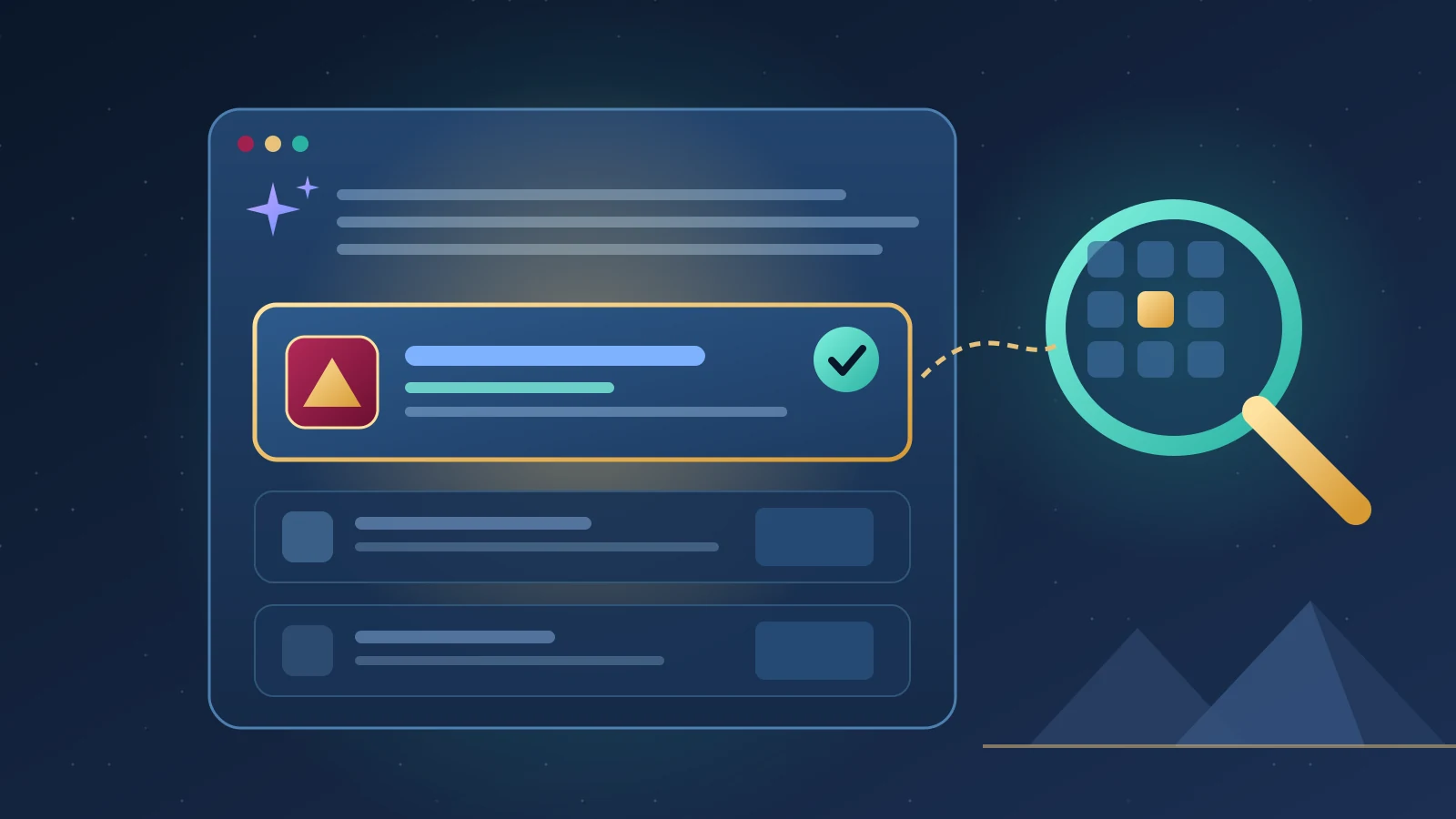
- An official sites section: Google noted that sometimes there are only one or two official places on the web to complete a task, and said it will test showing these links in a dedicated section at the top of a response, with context about why each link is useful.
- Timely article carousels: carousels for timely articles are rolling out to more locations and languages globally, highlighting Preferred Sources; Google said the number of people using that feature has grown more than 7x since the start of the year.
- More prominent related links: links at the end of some responses now get image thumbnails and a more clickable design.
After the announcement, Search Engine Watch spotted a test on 23 October 2026 that shows the website name as a larger, bold blue link with the site's favicon and URL below it, and on 26 October 2026 a "Further exploration" section listing websites with a line of text, an image and a date. These are tests, not a general launch, but they clearly show that a site's visual identity is becoming part of AI answers.
Why have the favicon and site name become marketing signals?
A favicon is the small square image that represents a website in the browser and in search results, declared with a link tag in the head of the home page. A site name in Google is the name an automated system picks to represent the source of a result, and it relies first on WebSite structured data on the home page.
When AI Mode shows your link with an icon, a name and a URL, the difference between an official site with a clear identity and a site with no icon or a truncated name becomes a difference in trust and clicks. In the Egyptian market, where copycat pages and intermediaries are common, a consistent identity helps customers tell your official site apart from any other page that talks about you.
What does Google's official documentation say about appearing in AI Mode?
Google Search Central's page on AI features and your website states that there are no additional requirements or special optimizations needed to appear in AI Overviews or AI Mode, and that to be shown as a supporting link a page must be indexed and eligible to be shown in Search with a snippet. Best practices it highlights include:
- Allowing crawling in robots.txt and by any CDN or hosting infrastructure.
- Making content easy to find through internal links.
- Making important content available in textual form.
- Making sure structured data matches the visible text on the page.
Google's crawler documentation also explains that the Google-Extended token does not affect a site's inclusion in Google Search and is not used as a ranking signal; blocking it concerns Gemini model training and grounding in other products, while Search appearance is controlled through Googlebot.
Google's favicon guidelines for search results require a link tag in the head of the home page, a square favicon with a 1:1 aspect ratio of at least 8x8px (larger than 48x48px is recommended), a stable URL, and that neither the favicon nor the home page is blocked from crawling. Google supports one favicon per hostname. The site name guidelines say WebSite structured data on the home page is the most important way to indicate your preferred name, that the system also considers og:site_name, the title element and headings, and that site names are supported at the domain or subdomain level, not for subdirectories.
Our measurement: how do Egyptian websites look against AI Mode signals?
On 28 October 2026 (09:34 Cairo time, UTC+3) the Smart One Group team checked the home pages of all 332 Egyptian domains in the Tranco top one million list (list 262N9). We requested the home page over HTTPS on the bare domain and then www, parsed the icon tags, downloaded the favicon file and measured its dimensions, looked for WebSite and organization structured data, og:site_name, the lang attribute and robots tags, and read robots.txt.
263 home pages returned a successful status, of which 34 only loaded after skipping certificate verification in our tool, and 69 domains were unreachable because of certificate, connection or request-refusal errors. Results across the 263 sites:
| Signal | Count | Share |
|---|---|---|
| Working favicon (from a link tag or /favicon.ico) | 232 | 88% |
| No working favicon | 31 | 12% |
| Non-square favicon (of 232) | 39 | 17% |
| Square favicon of 48px or more (of 232) | 100 | 43% |
| WebSite structured data | 58 | 22% |
| Organization-type structured data | 72 | 27% |
| Neither WebSite nor og:site_name | 178 | 68% |
| All signals together: favicon, WebSite, crawling allowed, indexable page | 52 | 20% |
Government sites: the most in need of an "official sites" slot, and the least ready
Of the 69 reachable government sites (gov.eg), 60 have a working favicon, but only one declares WebSite structured data and only six declare organization data. By contrast, 22 of 80 education sites (edu.eg) and 22 of 70 commercial sites (com.eg) declare WebSite data. The irony is that government services are exactly the kind of task Google describes as having only one or two official places.
Crawling is not the main problem
Only one domain blocks Googlebot from its home page in robots.txt and no home page carries nosnippet, while 8 home pages carry noindex, two of them login pages. 16 sites block GPTBot and 12 block Google-Extended, which according to Google's documentation does not affect Google Search. Only 98 sites (37%) list a sitemap in robots.txt, and 59 sites do not declare the page language in a lang attribute. The bottom line: most Egyptian websites are visible to Google, but many do not clearly tell it who they are.
A 7-step checklist to get your website ready for Google AI Mode
At Smart One Group we built this checklist around three pillars: identity, access and clarity. Work through it in order:
- A clear square favicon: design a 1:1 icon of at least 48x48px (larger is better) and declare it with link rel="icon" in the head of the home page, using a stable URL that does not change with every release.
- WebSite structured data: add WebSite JSON-LD on the home page with the company's official name, and use alternateName for a short name or the Arabic or English variant.
- Organization data: add Organization (or a more specific type such as MedicalOrganization for clinics) with your logo and contact details, matching what is visible on the page.
- A consistent name: use the same name in WebSite, og:site_name, the title element and the home page heading, and never leave the title as a generic word like "Home".
- Crawler access: make sure robots.txt, your firewall and your CDN do not block Googlebot or Googlebot-Image from the home page and the favicon, and that your HTTPS certificate is valid with a complete chain.
- Official task pages: give every task customers search for (booking, renewal, order tracking, prices) a clear text page that can be linked directly, with the correct lang attribute.
- Follow-up: check the home page with the URL Inspection tool in Search Console and request indexing, keeping in mind that a new favicon can take several days to several weeks to appear.
Common mistakes that weaken your presence in AI answers
- A rectangular favicon cropped from the full logo, which shows distorted or not at all.
- A link tag pointing to a file deleted during a redesign; we found 10 sites with this error.
- A development-stage noindex tag left on the home page after launch.
- Blocking Google-Extended in the belief that it hides the site from AI Mode, when Search appearance is controlled by Googlebot.
- A firewall that rejects automated requests and silently blocks legitimate crawlers.
If your ad campaigns depend on trust in the link, also read our guide on the Chrome HTTP warning and its effect on campaign visitors.
Frequently asked questions
What is the "official sites" section in Google AI Mode?
It is a display Google has been testing since October 2026 that places one or two official sites for completing a specific task at the top of an AI Mode response, with context about why each link is useful. Google has not announced a date for general availability.
Do I need special optimizations for my site to appear in AI Mode?
No. Google says there are no additional requirements; the page must be indexed and eligible to appear with a snippet. But your favicon, site name and structured data determine how your site is displayed and how customers recognize it.
Does blocking Google-Extended in robots.txt hide my site from AI Mode?
No. According to Google's documentation, Google-Extended does not affect a site's inclusion or ranking in Google Search; to control what is shown from your pages in Search, use controls such as nosnippet and noindex.
What is the right favicon size for Google results?
It must be square with a 1:1 aspect ratio and at least 8x8px, and Google recommends larger than 48x48px. In our scan, 39 Egyptian favicons were not square.
How do I set the name Google shows for my site?
Add WebSite structured data to your home page with your preferred name and keep it consistent with og:site_name and the title element. The final choice is automated, but this is the strongest signal you can send.
Does this apply to government and clinic websites?
Yes, and they benefit the most, because users looking for them want one official place. In our measurement only 1 of 69 government sites declared WebSite structured data.
Smart One Group helps companies, clinics and organizations in Egypt with web development and technical readiness, digital marketing and search visibility, and hosting with valid certificates that do not block crawlers. If you want your site checked against this checklist, contact us and we will review the seven signals with you.