Cross-Border Data Transfer in Egypt: A Hosting Map for Clinic and ERP Systems After the PDPL Grace Period
Short answer: Hosting a clinic or ERP system on a server outside Egypt, or keeping its backups abroad, falls within the definition of cross-border movement of personal data in Law No. 151 of 2020 and its Executive Regulations (Ministerial Decree No. 816 of 2025). It requires a licence or permit from the Personal Data Protection Centre (PDPC) that names the destination country, plus the data subject's consent. Because health data is sensitive data, clinics face stricter conditions. Start with a map of where every copy of your data lives, then choose between hosting in Egypt, applying for a transfer licence, or a hybrid design.
The transitional period for complying with Egypt's Personal Data Protection Law ended at the start of November 2026, so cross-border data transfer is now a practical question for every clinic or company whose system runs on a foreign cloud server. This guide explains what the official texts say and turns them into a technical map of a clinic or ERP system: where data is stored, where it passes, and who reaches it from abroad. It is general technical information, not legal advice; the final classification of your activity needs a qualified lawyer.
What does cross-border data transfer mean under Egyptian law?
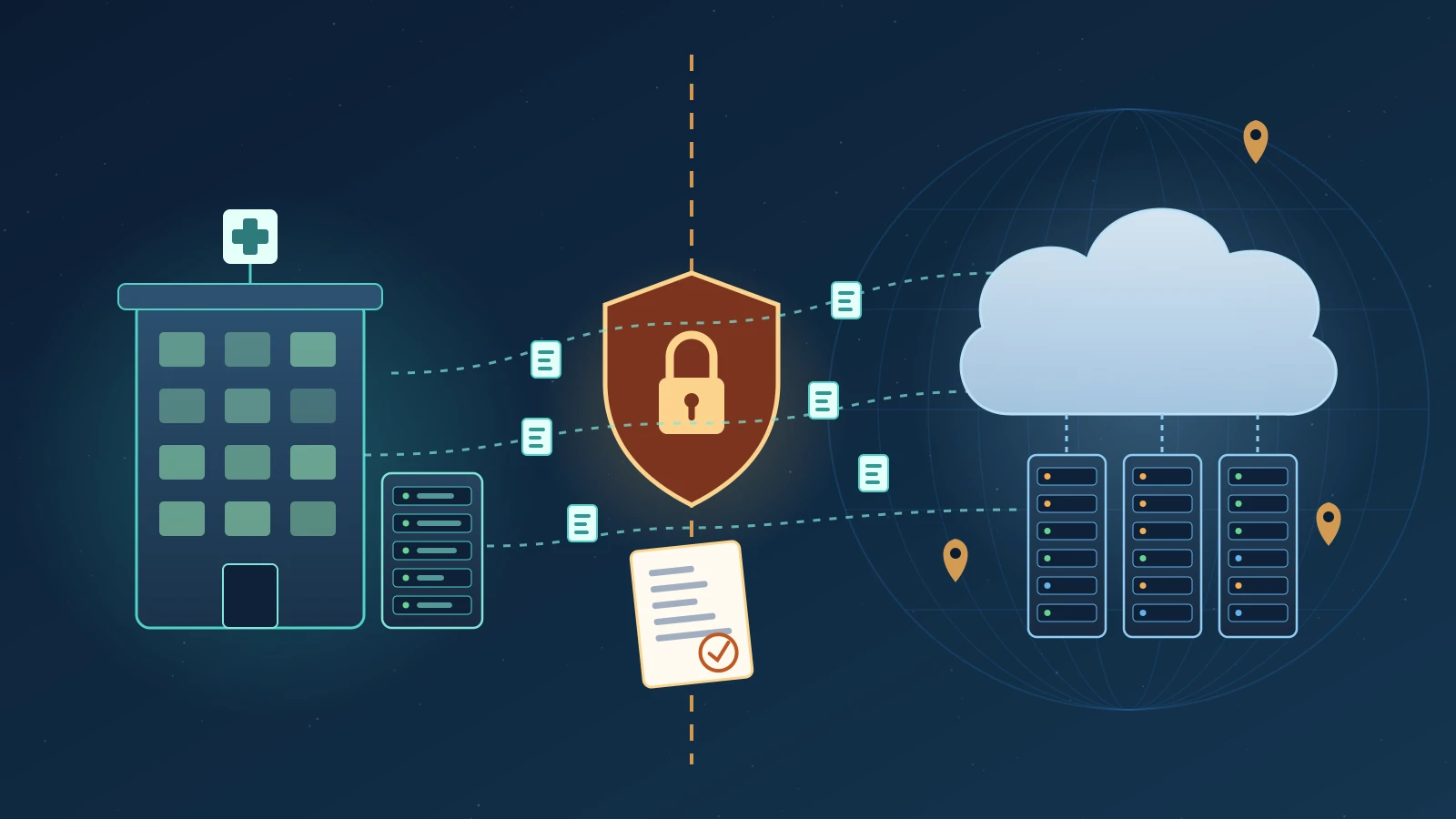
Cross-border movement of personal data, as defined in Article 1 of Law No. 151 of 2020, means transferring, granting access to, recording, storing, circulating, publishing, using, displaying, sending, receiving, retrieving or processing personal data from inside Egypt's borders to outside them, or the opposite. In other words, nobody has to export a file manually: simply storing patient or customer records on a server in another country falls within the definition.
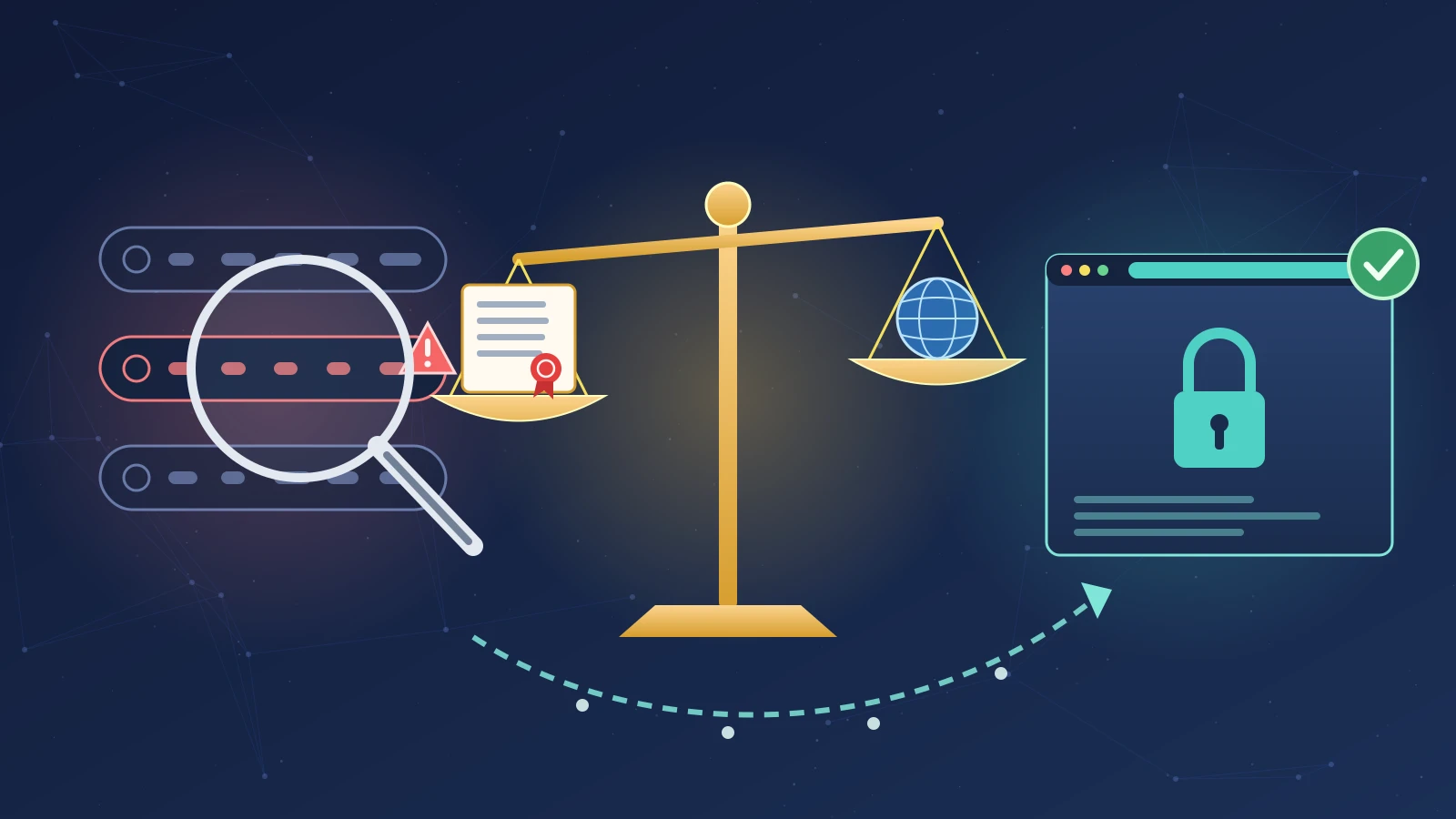
Article 14 of the Law prohibits transferring, storing or sharing personal data in a foreign country unless that country offers a level of protection not lower than the Law's, and only with a PDPC licence or permit. Article 16 of the Executive Regulations then sets four rules: obtain a licence or permit based on the PDPC's assessment of the destination's adequacy; obtain the data subject's consent; use technologies that ensure adequate protection during transfer and storage; and transfer only to the countries named in the licence, updating it when a new country is added.
Why do clinic systems face stricter conditions?
The Law defines sensitive personal data as data disclosing psychological, mental, physical or genetic health, biometric data, financial data and other categories, and children's data is always sensitive. Medical records, lab results, imaging and payment details all fall into this category.
Article 12 of the Law requires a PDPC licence to collect, transfer, store or process sensitive data, plus the data subject's explicit written consent except where the law permits otherwise. Article 14 of the Regulations adds that consent may be on paper or electronic, and that secured electronic records must be kept of consents and of erasure and correction requests. A clinic hosting its system abroad therefore faces both the sensitive-data rules and the cross-border rules at once.
The penalties are not symbolic. Article 41 of the Law punishes handling sensitive data without the data subject's consent or outside lawful cases, and Article 42 punishes breaches of the cross-border rules in Articles 14, 15 and 16. Both carry imprisonment of at least three months and a fine of EGP 500,000 to EGP 5 million, or either penalty.
Where does your system's data leave Egypt without you noticing?
Most organisations know where their main server is, but personal data passes through many other components. At Smart One Group we prepared the table below from our experience building and running clinic and ERP systems, as a starting point for a technical inventory. It is our technical analysis, not an official PDPC classification.
| Component | Common examples | When it may count as a cross-border transfer | What to record in the inventory |
|---|---|---|---|
| Application server and database | Cloud server, VPS or dedicated server | When the data centre is outside Egypt | Country, city, provider and data categories |
| Backups and snapshots | Daily backups to cloud storage | When storage is in another country, even if the main server is in Egypt | Location of each copy, retention and encryption |
| Patient files and attachments | Imaging, PDF reports and invoices | When uploaded to a foreign file-storage service | File types, volume and storage location |
| Email and SMS | Appointment confirmations and lab results | When the sending service processes names and numbers outside Egypt | Provider and the data passing through it |
| Logs and error tracking | Error-monitoring and logging tools | When logs capture names, phone numbers or diagnoses | Fields sent, retention and masking options |
| CDN and web application firewall | CDN and WAF services | When they cache pages or responses containing personal data | Caching policy and server locations |
| AI and translation APIs | Summarising reports or transcribing voice notes | When patient text is sent to an external service | Data sent and the provider's policy |
| Remote technical support | A developer or vendor logging in from abroad | The legal definition covers granting access, displaying and retrieving, so access from abroad may fall within it | Who connects, from which country, with which permissions |
Note that Article 24 of the Regulations asks for both temporary and final storage locations, so naming the database location alone is not enough. Caches, message queues and logs are temporary storage locations that belong on the map.
What does a cross-border data transfer licence application require?
Article 24 of the Executive Regulations sets eight conditions for a cross-border transfer licence or permit for legal entities. Each maps to a technical document you can prepare from the inventory above:
| What Article 24 requires | Matching technical evidence |
|---|---|
| The destination of the transfer | List of countries and data-centre regions per component |
| Proof of the activity of the receiving controller or processor | Hosting and service provider details and contracts |
| The nature of the personal data | Field classification: identity, contact, health, financial |
| Security systems and temporary and final storage locations | Data-flow diagram, encryption settings and access rights |
| Proof of compliance with transfer rules | Internal policies and processing records |
| The purpose of the transfer | Reason for choosing foreign hosting per component |
| Sufficient storage-location details on PDPC forms | Data-centre locations as published by the provider |
| Data categories, volume and retention period | Record counts and retention and erasure policy |
Article 26 requires the application to be filed through the PDPC's electronic portal and the PDPC to notify its decision within 90 working days of receiving all information and documents; no reply counts as a refusal. Article 27 sets the transfer licence fee at 50% of the controller or processor licence fee, depending on the nature and volume of the data. Article 4 also requires processors that transfer data abroad to record, in their electronic register, the destination countries, their security systems and the data path.
In practice, Habib Al Mulla and Partners reported on 10 November 2026 that the PDPC portal is now live, that a company profile is anchored to its Commercial Register number, that a licence application cannot be completed without a PDPC-registered data protection officer, and that registering the officer may take around 30 working days.
Are there exceptions to the licence requirement?
Article 15 of the Law, as an exception to Article 14, allows transfers to a country without the required level of protection with the data subject's explicit consent and in specific cases, including protecting their life and providing medical care, treatment or health-service management to them, performing a contract for their benefit, money transfers and international judicial cooperation. In our view this exception is tied to the individual patient, such as sending their file to a hospital abroad for treatment, and is not a general basis for hosting a clinic's entire database abroad. Check this with your legal adviser before relying on it.
Article 17 of the Regulations allows making data available to another controller or processor outside Egypt with a PDPC licence where the group companies' activities align, there is a legitimate interest and protection is not lower than in Egypt. As for the list of adequate countries that Article 16 says the PDPC will set, an ACTPOL report dated 25 September 2026 said it had not been published, and we could not find a published list at the time of writing. Each application is therefore assessed by destination.
What are the practical options for a clinic or company?
| Option | When it fits | What to watch |
|---|---|---|
| Host the system and its backups in Egypt | Clinics and facilities mainly handling health data of patients in Egypt | Does not replace the controller and sensitive-data licence; make sure auxiliary services such as email and logs do not send data abroad |
| Keep foreign hosting and apply for a transfer licence | Companies tied to an international group or to systems not available locally | One application per country, decisions in up to 90 working days, and licence updates when a country is added |
| Hybrid design | Systems whose personal data can be separated from other components | Keep the database and files in Egypt and route only public content through foreign services, testing that no personal fields leak |
A 7-step checklist to review your system's hosting
- List the components: every server, cloud service, email and SMS provider and monitoring tool the system uses.
- Find the country of each component: from the provider's control panel and contract, not its corporate address.
- Classify the data: separate health, financial and children's data from ordinary data.
- Draw the data path: from the booking form to the backup copy, including temporary storage.
- Reduce what leaves: mask personal fields in logs and error tools, and avoid sending patient text to external services without need.
- Review consents: make sure consent forms mention any transfer abroad and are kept in a secured register.
- Decide and apply: move hosting to Egypt or prepare the licence application on the portal with your data protection officer.
If you are just starting, read our website compliance checklist for the Data Protection Law first, then our ransomware recovery and 72-hour breach notice plan, because where your backups live affects both.
How can Smart One Group help?
Smart One Group builds custom software for clinics and companies and provides hosting and server services. Our team can prepare the technical inventory and data-flow diagram your legal adviser and data protection officer need, and assess options for moving the system or separating its components. To talk to the team, contact us.
Frequently asked questions
Does hosting a clinic website abroad count as a data transfer?
If the website collects personal data, such as a booking or contact form, and stores it on a server outside Egypt, it falls within the definition of cross-border movement. A brochure website that collects no personal data is a different case.
Is patient consent enough without a PDPC licence?
Not under the general rule: Article 16 of the Regulations requires both a licence or permit and the data subject's consent. The exceptions in Article 15 of the Law are limited to specific cases, so do not rely on them without legal advice.
How long does a transfer licence decision take?
Up to 90 working days from the date all information and documents are complete, under Article 26 of the Regulations, and no reply counts as a refusal.
How much is the cross-border transfer licence fee?
50% of the controller or processor licence fee set for the volume and nature of the data, under Article 27 of the Regulations. The base licence fees in Article 19 depend on the number of records.
Do backups stored abroad alone need a licence?
The legal definition covers storage, and a backup is a full stored copy of the data, so treat it as a cross-border transfer even if the main server is in Egypt.
What happens if the hosting provider changes data centre?
Article 16 of the Regulations limits transfers to the countries named in the licence and requires an update when countries are added. Ask your provider contractually for advance notice before any change in hosting country.