Post-Quantum TLS in Egypt: We Scanned 332 .eg Sites After NIST's New Roadmap
Short answer: Post-quantum TLS means the browser and server agree on the session key with a hybrid mechanism such as X25519MLKEM768 inside TLS 1.3, so traffic recorded today cannot be decrypted later by a quantum computer. We scanned 332 Egyptian .eg domains on the morning of 4 November 2026: only 94 of the 289 that responded (32.5%) negotiated it, and 119 (41.2%) are still capped at TLS 1.2, which cannot be upgraded to post-quantum TLS at all.
On 27 October 2026 the US National Institute of Standards and Technology (NIST) published the final version of NIST IR 8547, which sets when RSA and elliptic-curve algorithms will be retired. Days earlier, the UK National Cyber Security Centre stated that TLS 1.3 is the only version that supports post-quantum cryptography. This article explains what that means for website and system owners in Egypt, shares the results of Smart One Group's own scan of the most visited Egyptian domains, and ends with a practical 7-step plan for post-quantum TLS.
What is post-quantum TLS and why does it matter for your site now?
Post-quantum cryptography is a family of algorithms designed to withstand attacks by future quantum computers; the best known on the web today is ML-KEM, standardised in the US standard FIPS 203. The problem is not that a quantum computer able to break today's encryption exists now. It is the "harvest now, decrypt later" threat: an adversary records encrypted traffic today and stores it until it can be decrypted years from now. NIST's announcement names this threat explicitly as a reason to move early.
That is why data that must stay confidential for years, such as patient files in a clinic management system, payroll in an HR system, or customer and account data in an ERP, deserves protection first, even if a quantum computer still looks far away.
What is X25519MLKEM768?
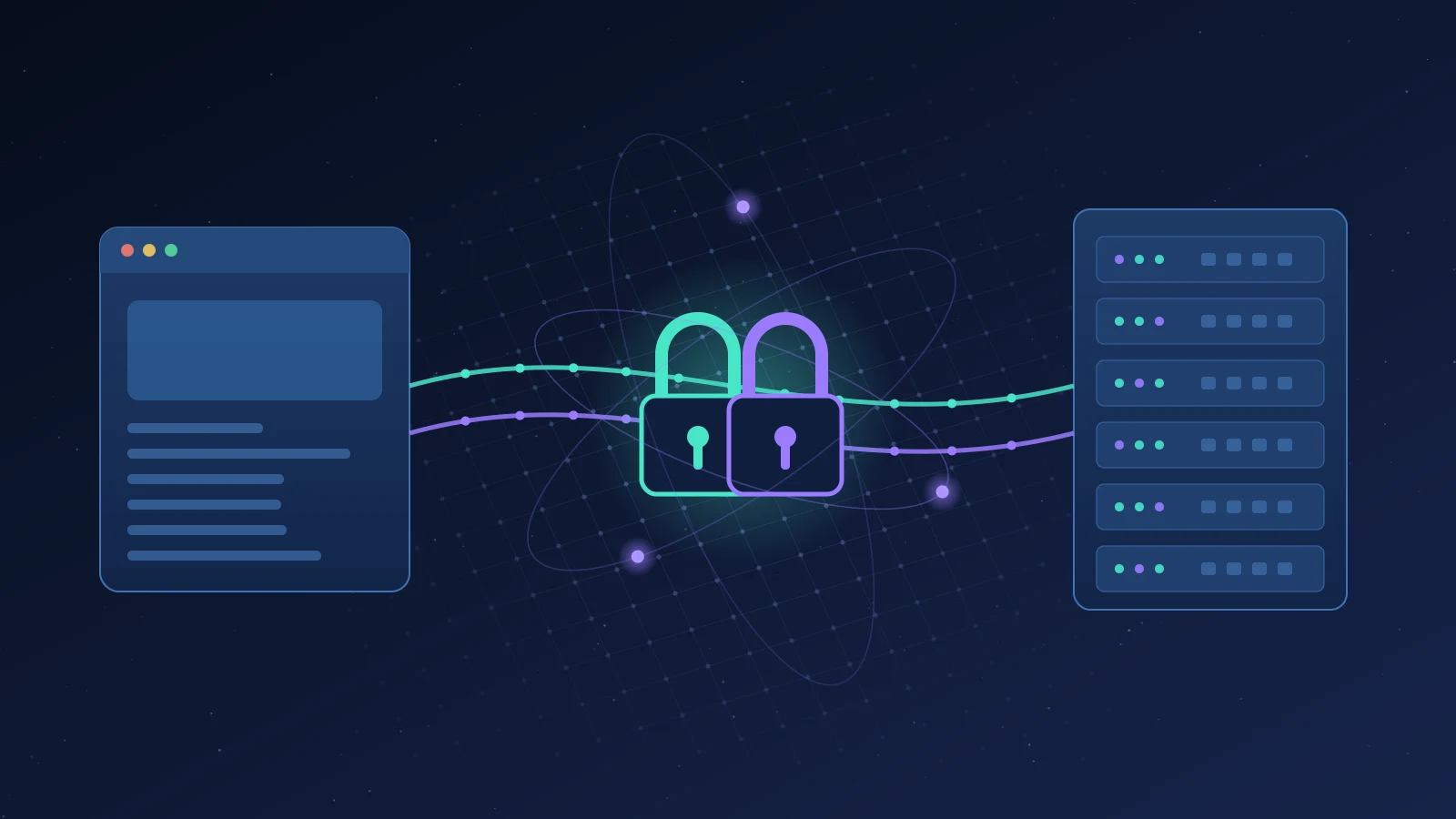
X25519MLKEM768 is a hybrid key exchange that combines the classical X25519 curve with post-quantum ML-KEM-768; the session stays secure as long as either half holds. It is defined in IETF RFC 10024 with codepoint 0x11EC and marked "Recommended", and many modern browsers support it. NIST compares the hybrid approach to using two padlocks on a door instead of one.
What changed in October 2026?
- 27 October 2026: the final NIST IR 8547 lists RSA, ECDSA, EdDSA and elliptic-curve key establishment as "deprecated after 2030" and "disallowed after 2035" under NIST standards, and notes that US federal systems must support TLS 1.3 no later than 2 January 2030.
- 15 October 2026: the UK NCSC updated its TLS configuration guidance, saying versions before TLS 1.3 will not be upgraded and that high-priority migration activities should be completed by 2031.
- Globally: the GeoTrust October 2026 report found that 61.3% of 973,441 deep-scanned websites offer hybrid key exchange, falling to 33.6% when Cloudflare-fronted sites are excluded.
In Egypt, the Minister of Communications and Information Technology said at CAISEC in June 2026 that quantum computing introduces future challenges that require proactive preparation, and noted that the Supreme Cybersecurity Council has begun preparing the third National Cybersecurity Strategy. As of publication we found no published Egyptian timeline requiring post-quantum TLS on websites, but the global direction is clear.
We scanned 332 Egyptian domains: do Egyptian sites support post-quantum TLS?
Methodology: we took every .eg domain in the Tranco top-million list (list 262N9), 332 domains in total. On 4 November 2026 at 09:34 Cairo time we ran a TLS handshake to port 443 for each one (the apex, then www on failure) using OpenSSL 3.5.7 with a modern-browser-like offer: X25519MLKEM768 first, then classical groups. A second handshake offered the hybrid group alone as a cross-check. The network of the first IP address was identified from Team Cymru data.
| Indicator | Count | Share |
|---|---|---|
| Domains that completed a TLS handshake | 289 of 332 | — |
| Negotiated TLS 1.3 | 170 | 58.8% |
| Negotiated X25519MLKEM768 (post-quantum) | 94 | 32.5% |
| TLS 1.3 without hybrid key exchange | 76 | 26.3% |
| Capped at TLS 1.2 | 119 | 41.2% |
| Certificate verification failed (expired, incomplete chain or self-signed) | 36 | 12.5% |
The second handshake matched exactly: the same 94 sites accepted the hybrid group on its own and no other site did. Every certificate we saw used RSA (209 sites) or ECDSA (74 sites); we found no post-quantum certificate signature.
Hosting decides the result more than sector
- 63 of 65 sites behind Cloudflare negotiated hybrid key exchange.
- 83 of 109 sites on the large CDN and cloud networks (76.1%) did, versus just 11 of 180 sites on all other networks (6.1%).
- Of 138 sites on IP addresses registered in Egypt, only 5 (3.6%) support post-quantum TLS and 93 (67.4%) are capped at TLS 1.2.
- Of 149 sites on addresses registered outside Egypt, 89 (59.7%) support it and only 24 (16.1%) are capped at TLS 1.2.
Results by domain type
| Zone | Responded | Post-quantum | TLS 1.2 only |
|---|---|---|---|
| gov.eg | 72 | 10 (13.9%) | 46 (63.9%) |
| edu.eg | 85 | 21 (24.7%) | 32 (37.6%) |
| com.eg | 82 | 33 (40.2%) | 29 (35.4%) |
| bare .eg | 42 | 24 (57.1%) | 11 (26.2%) |
The takeaway: Egypt's gap is not in the algorithms but in the servers. Sites run by global networks got protection automatically, while most local and government servers still run older TLS configurations. In most cases the fix is a software upgrade and configuration change, not a major project.
A priority framework: which systems first?
We suggest a simple framework that links how long the data must stay secret with how exposed the server is:
| Situation | Priority | Suggested action |
|---|---|---|
| Clinic, ERP, payroll system or login portal on TLS 1.2 | Urgent | Enable TLS 1.3 and upgrade the crypto library this quarter |
| API carrying customer or payment data | High | Enable hybrid key exchange and test with client apps |
| Brochure site on TLS 1.3 without hybrid exchange | Medium | Upgrade OpenSSL and the web server in routine maintenance |
| Site behind a CDN that already supports it | Monitor | Check that the CDN-to-origin connection is also encrypted |
A 7-step plan to move to post-quantum TLS
- Inventory every TLS endpoint: website, control panel, APIs, webmail and remote-access systems. Subdomains are often forgotten.
- Test each endpoint: with OpenSSL 3.5 or later run openssl s_client -connect example.eg:443 -tls1_3 -groups X25519MLKEM768 and look for the line Negotiated TLS1.3 group: X25519MLKEM768.
- Enable TLS 1.3 first: no server limited to TLS 1.2 can offer hybrid key exchange, so this is a precondition for everything else.
- Upgrade the crypto library: since OpenSSL 3.5 the default group list prefers hybrid groups, so a server built on it usually supports them without extra configuration. If your configuration sets the curve list by hand, make sure X25519MLKEM768 comes first.
- Test firewalls: OpenSSL documentation warns that the larger ClientHello may no longer fit in a single TCP segment and some firewalls may wrongly disrupt the handshake, so test from your real customer networks before rolling out.
- Fix certificates now: you do not need a post-quantum certificate yet, but 36 sites in our scan failed certificate verification. Review the chain and automatic renewal, as covered in our article on new SSL certificate validity rules.
- Document and monitor: record each endpoint's result, rescan every three months, and make TLS 1.3 and hybrid key exchange a requirement in every new hosting or development contract.
If your servers are old, the upgrade is also a chance to close other open items such as IPv6 readiness. Smart One Group provides hosting and servers, website and system development and technical support contracts that cover this kind of upgrade.
Frequently asked questions
What is post-quantum cryptography in brief?
It is a new family of encryption algorithms, such as ML-KEM, designed to resist future quantum computers. On websites it is used today in hybrid form alongside classical algorithms inside TLS 1.3 to protect the session key.
Is my site's data at risk today?
No publicly known quantum computer can break current encryption, but data recorded today could be decrypted later. Protection now matters most for data that must stay confidential for years, such as medical and financial records.
How do I know if my site supports X25519MLKEM768?
Run openssl s_client with -groups X25519MLKEM768 using OpenSSL 3.5 or later. If you see Negotiated TLS1.3 group: X25519MLKEM768 the site supports it; if it negotiates TLS 1.2, the site needs an upgrade first.
Do I need a new SSL certificate for post-quantum TLS?
Not yet. Hybrid key exchange works with existing RSA and ECDSA certificates, and our scan found no post-quantum certificate. Post-quantum certificate signatures are a later phase, with NIST timelines running to 2035.
Can post-quantum TLS cause operational problems?
The main operational note in OpenSSL documentation is size, not speed: the hybrid ClientHello is larger and may not fit in one TCP segment, so handshakes can occasionally fail behind old firewalls. Test from customer networks before rollout and watch error logs after enabling it.
Are there mandatory deadlines in Egypt?
As of publication we found no published Egyptian timeline for post-quantum cryptography. The clear deadlines today are American and British: TLS 1.3 for US federal systems by 2 January 2030, and NIST deprecating RSA and elliptic curves after 2030 and disallowing them after 2035.
Want to know where your site or internal system stands? Contact the Smart One Group team to test your TLS endpoints and build an upgrade plan that fits your budget.